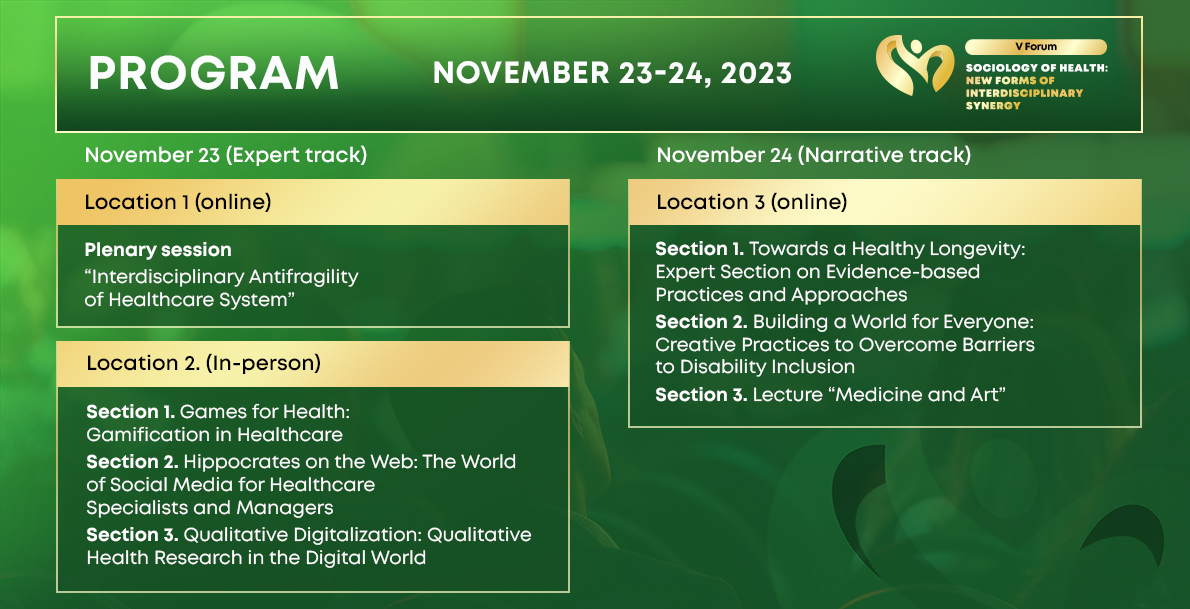



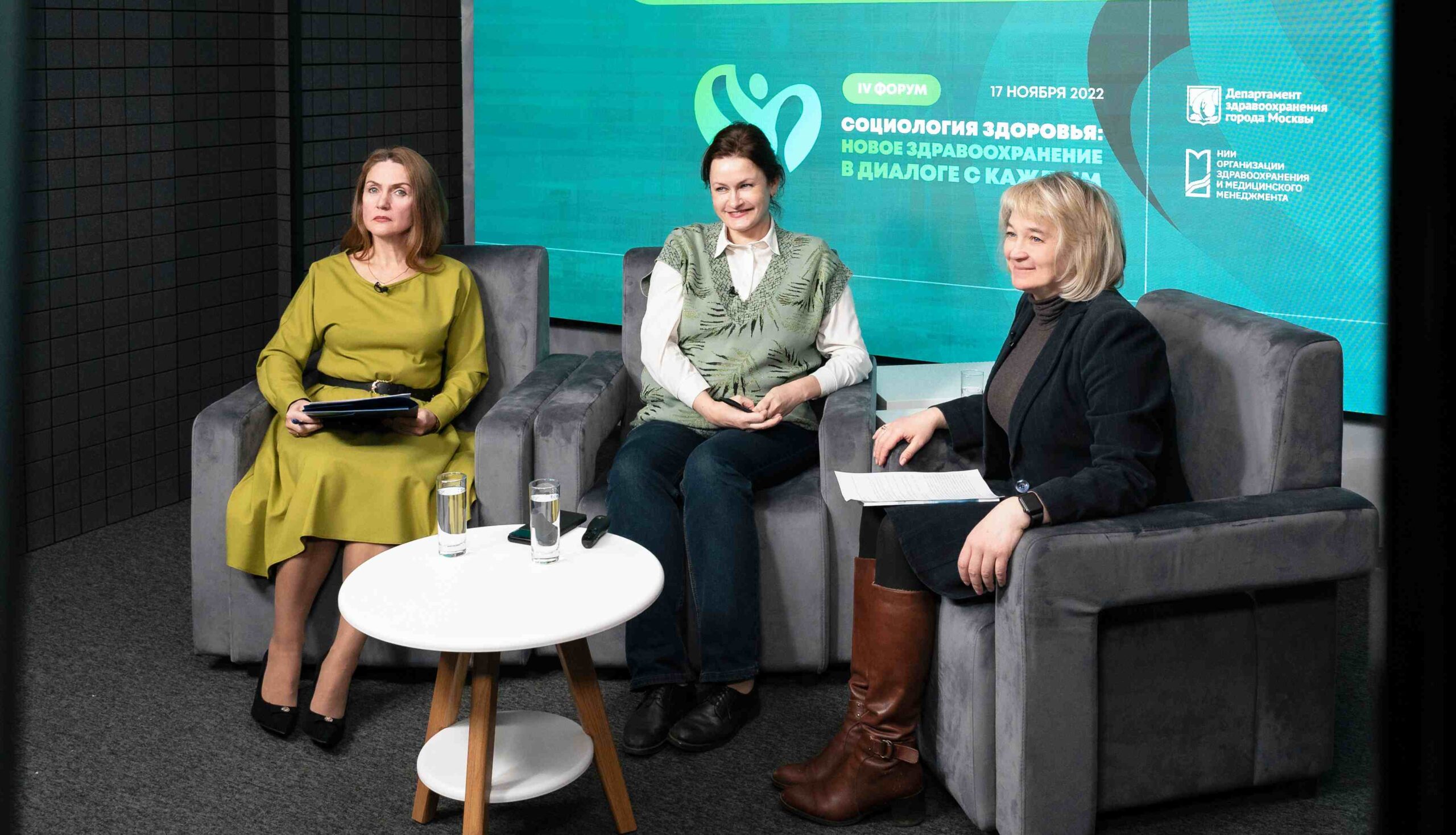
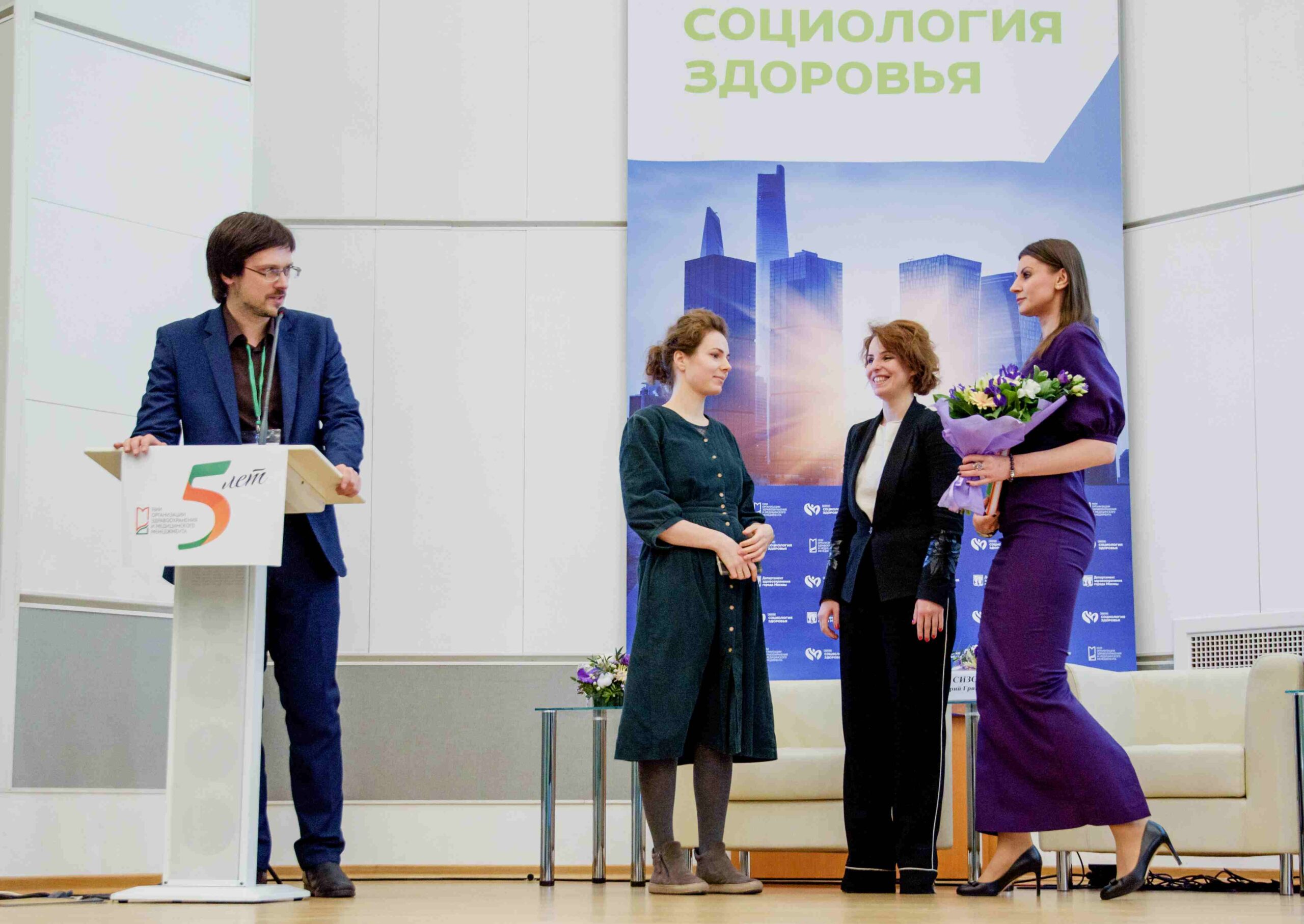
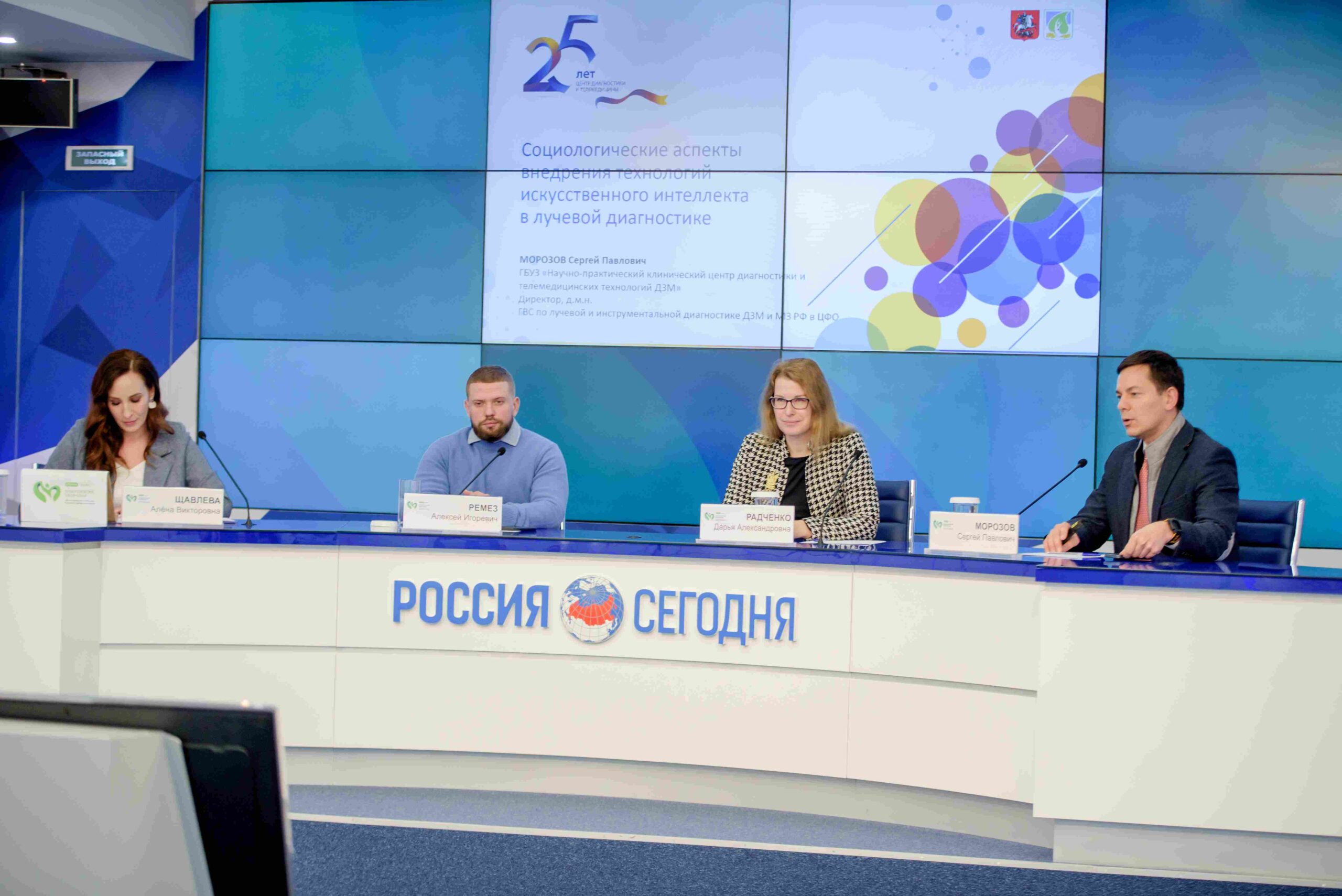
The V Forum Sociology of Health: New Forms of Interdisciplinary Synergy will be held in Moscow from November 23 to 24, 2023. For the fifth year, the Forum has provided a platform for discussion amongst members of the medical and socio-humanitarian communities with the goal of resolving the healthcare system’s most pressing issues.
The theme for this year, New Forms of Interdisciplinary Synergy, calls on new approaches to engagement, communication, and research in the healthcare system that would meet modern challenges.
When we discuss interdisciplinarity, we mean that the healthcare system should address different population groups and that these groups require different engagement approaches. Therefore, alternative kinds of communication, such as art, should be used in addition to the formal language of science or medicine.
The Forum will be held over two days, with expert sections on the first day and narrative events on the second day, which will explore new formats and topics in healthcare communication.
Interdisciplinarity can also be used to develop complex processes inside the healthcare system, such as digitalization processes, interactions with the elderly population, and people with disabilities. The topics will be discussed in specific sections of the Forum.
We aim to achieve new antifragility and growth in this interdisciplinary synergy so that our healthcare system can become resilient and grow stronger by exploring new development avenues.
This November, we welcome you to join us in our search.